


To Dig or not to Dig by Matty
- Becky Cottrell-Jury

- Sep 17, 2022
- 2 min read
At our volunteer Tuesday session I was asked about our growing methods at Community Roots and I really enjoyed the discussion that came around. So just in case any of you are wondering I’ll give you a rough idea of how we grow our veg and why we chose to do it this way.
We are using a no-dig system. Following the theory that in nature, soil is very seldom turned over as a plough would, and that by disturbing the soil as little as possible we can encourage all the beneficial microorganisms to work with us to create a healthy and productive garden.
This means that our 77 outdoor and 18 indoor beds are all created by laying cardboard directly onto the uncultivated grass, then a 100mm of green waste mulch is laid on top of the cardboard. We rake this flat into 3ft wide beds with 1ft wide pathways that are mulched with woodchip. We then have a nice even beds in straight rows that we can plant straight into.

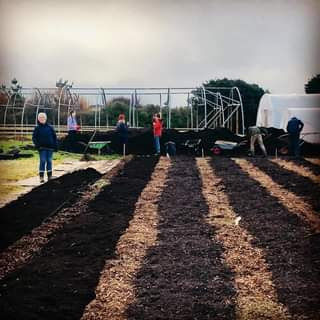
The benefits of this way of growing are many:
No machinery is need as most work can be done with hand tools and wheel barrows (a big job but really satisfying with a large group).
The finished beds are fairly weed free (the cardboard kills the grass and other weeds underneath).
The beds are much easier to plant, weed and hoe compared to the stony clay soil we have below, making these jobs much more achievable and enjoyable for volunteers of all ages and ability.
The mulch is great for retaining moisture in long dry spells.
The cardboard and woodchip we get are free waste products and the green waste compost is using a local recycled product too.
This simple system can be used by anyone in their own gardens or allotment.
Of course there is no one way of doing things that is right for everyone or perfect in every way, but no-dig really works for us. On the whole we have had a really successful first growing season and are looking forward to seeing it flourish in the years to come.


Comments